
Single-axis vs dual-axis solar trackers: choosing an architecture
Compare single-axis and dual-axis solar tracking through movement, yield, mechanical design, maintenance and the requirements of your site.
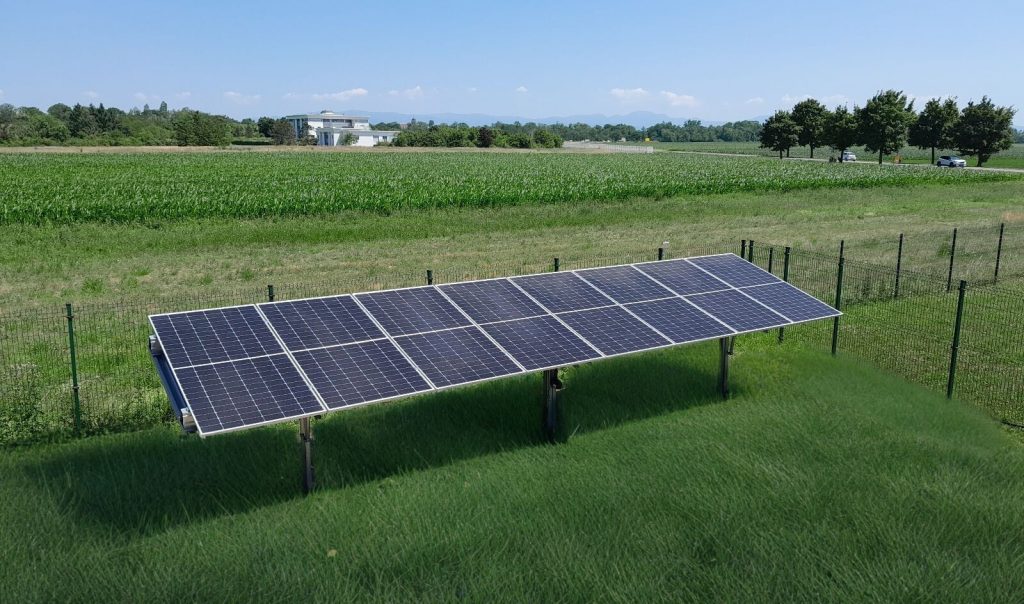
The number of tracking axes describes how the modules move. It does not, on its own, decide which system produces the best overall outcome for a project.
One axis and two axes
A single-axis tracker rotates the module structure about one axis. Falco systems use east–west tracking. A dual-axis tracker combines two movements to adjust its orientation in an additional direction. Exact geometry depends on the manufacturer and configuration.
Additional movement can change the energy profile, but the result still depends on location, shading, weather and control settings.
The Sandia PV Performance Modeling Collaborative explains single-axis geometry and modelling.
Use a common simulation basis
Compare equal installed capacity, consistent module specifications and the same weather dataset. Ask how losses, shading and safety positions are represented. A percentage from a different climate or a different system is not a reliable substitute.
For self-consumption, compare the generation intervals with the same measured demand. The value of additional energy depends on whether it is consumed locally or exported.
Review mechanical and operational differences
Two axes require a corresponding mechanical and control architecture. Complexity alone does not establish failure rates. Component quality, structural design, installation and maintenance all contribute to reliability.
Review access to drives, cables and bearings, the response to faults, the safety strategy and the availability of spare parts. These questions also apply to a single-axis design.
Compare the whole installation
| Criterion | Common comparison basis |
|---|---|
| Energy | Equal capacity, weather and loss assumptions |
| Consumption | The same time-resolved demand profile |
| Installation | Foundations, assembly and electrical connection |
| Operation | Inspections, replacements and service access |
| Land | Movement, spacing and retained site uses |
Falco’s Sun+, SunPro and Terra families provide single-axis options for different uses. Include a fixed PV alternative in the study when appropriate.
Your solar project starts here
Tell us about your site and electricity needs.